Suffolk Churches
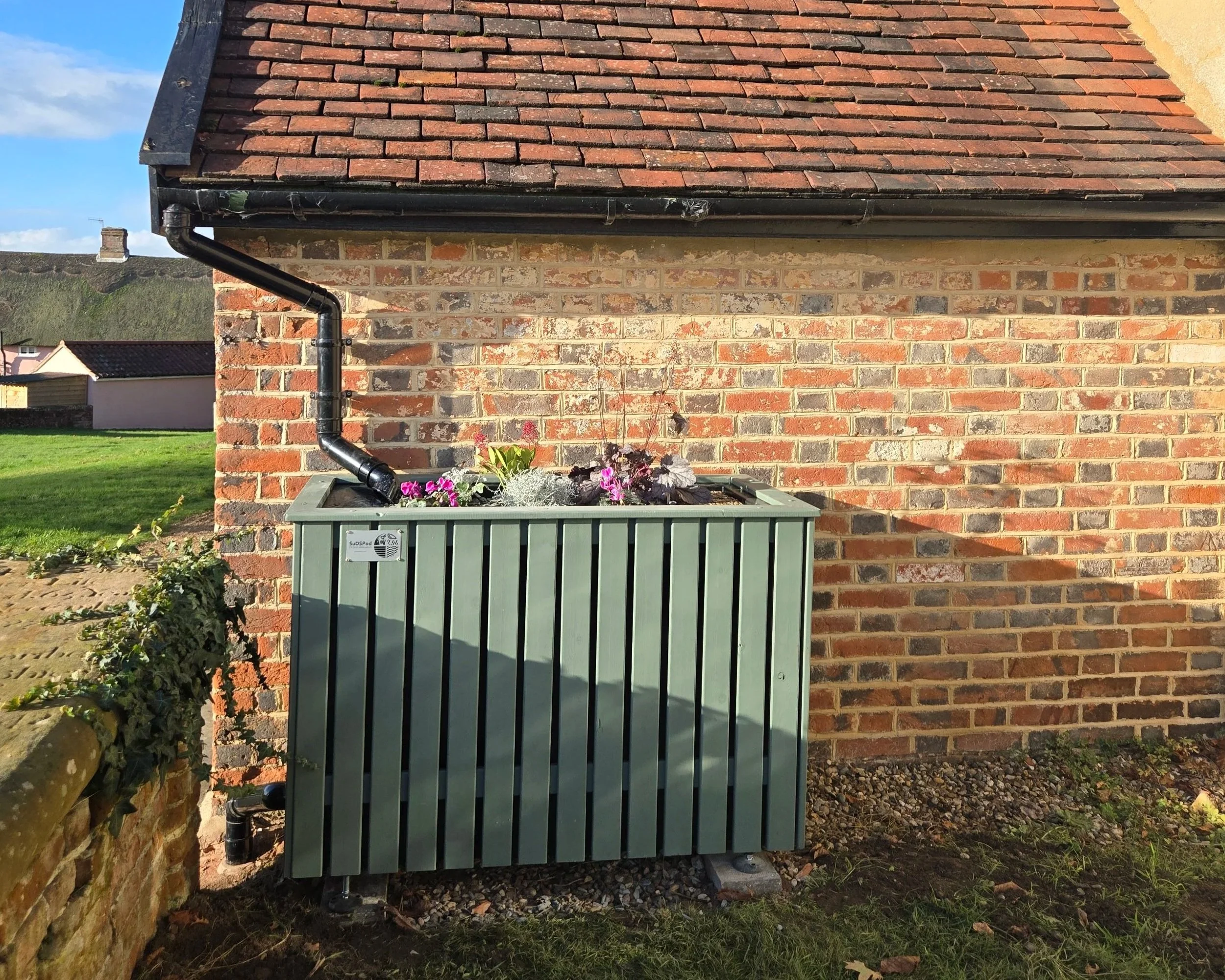
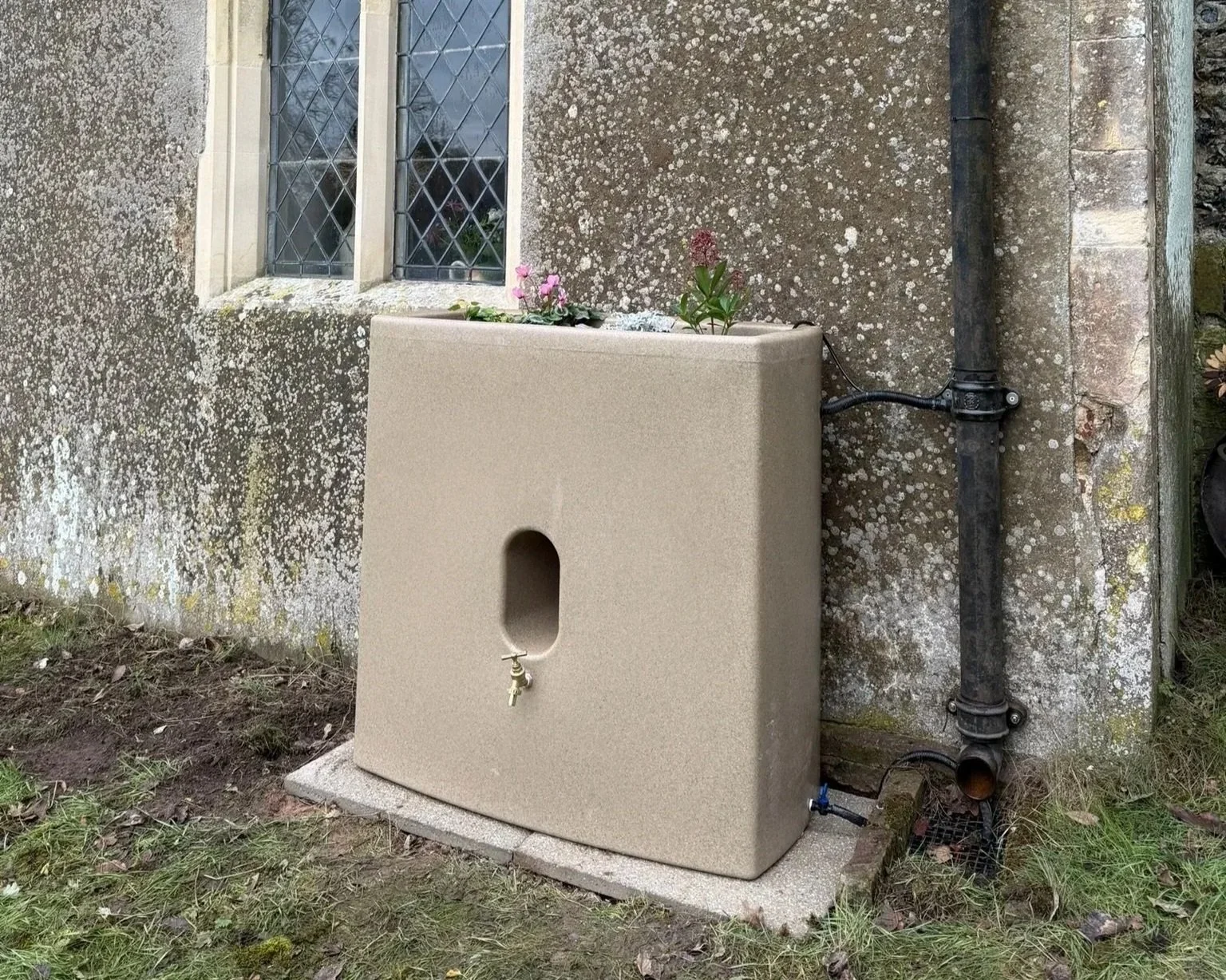
We are pleased to share our recent installation rainwater harvesting systems at two churches in Suffolk!
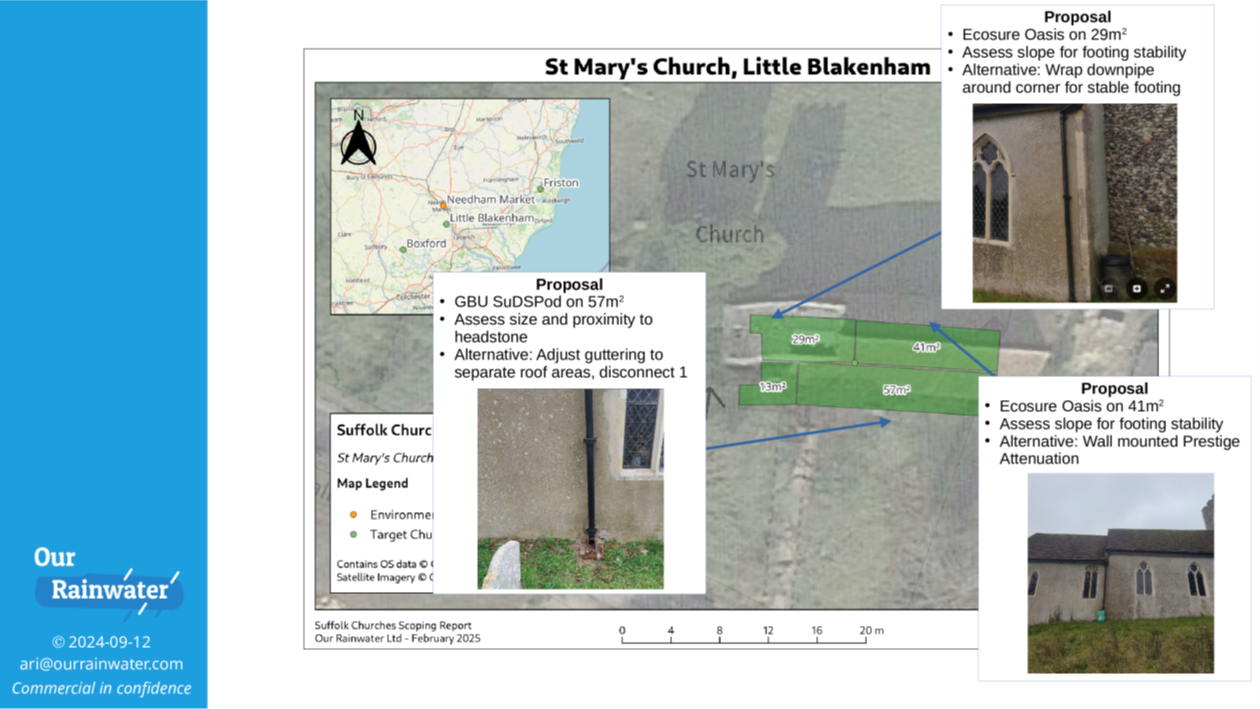
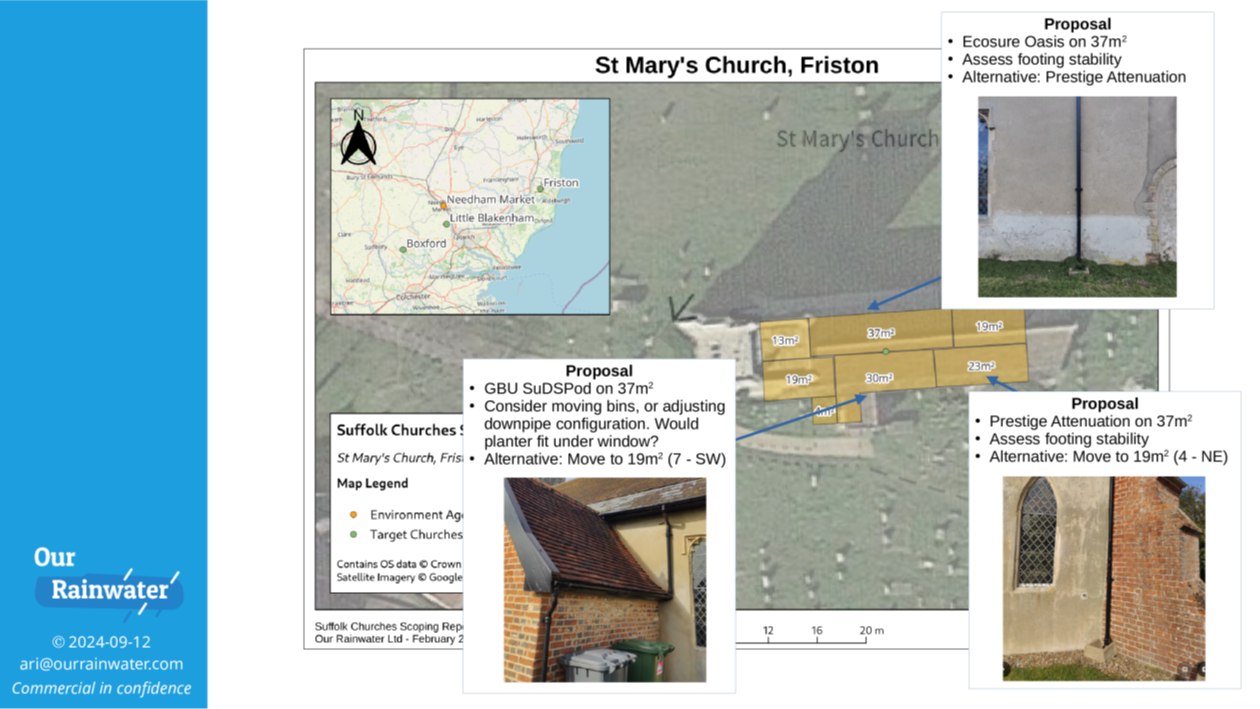
Friston’s St Mary the Virgin Church and Little Blakenham’s St Mary’s Church. The idea to partner with local churches came directly from our Community Working Groups and local churchwardens involved in Reclaim the Rain. What began as a simple plan for a water butt evolved into a bespoke rainwater capture project.
Working closely with the Parochial Church Council (PCC) and the Community Working Group, we commissioned OurRainwater to carry out detailed analysis on each church. This included reviewing local rainfall data, mapping the church roof areas to calculate how much water flows from each downpipe and reviewing attenuation rates of rainwater capture products.
OurRainwater also facilitated discussions with the Reclaim the Rain team and the PCC to understand priorities around aesthetics, biodiversity, and maintenance. These conversations ensured the solutions were practical, low-maintenance, and in keeping with the character of the churches.
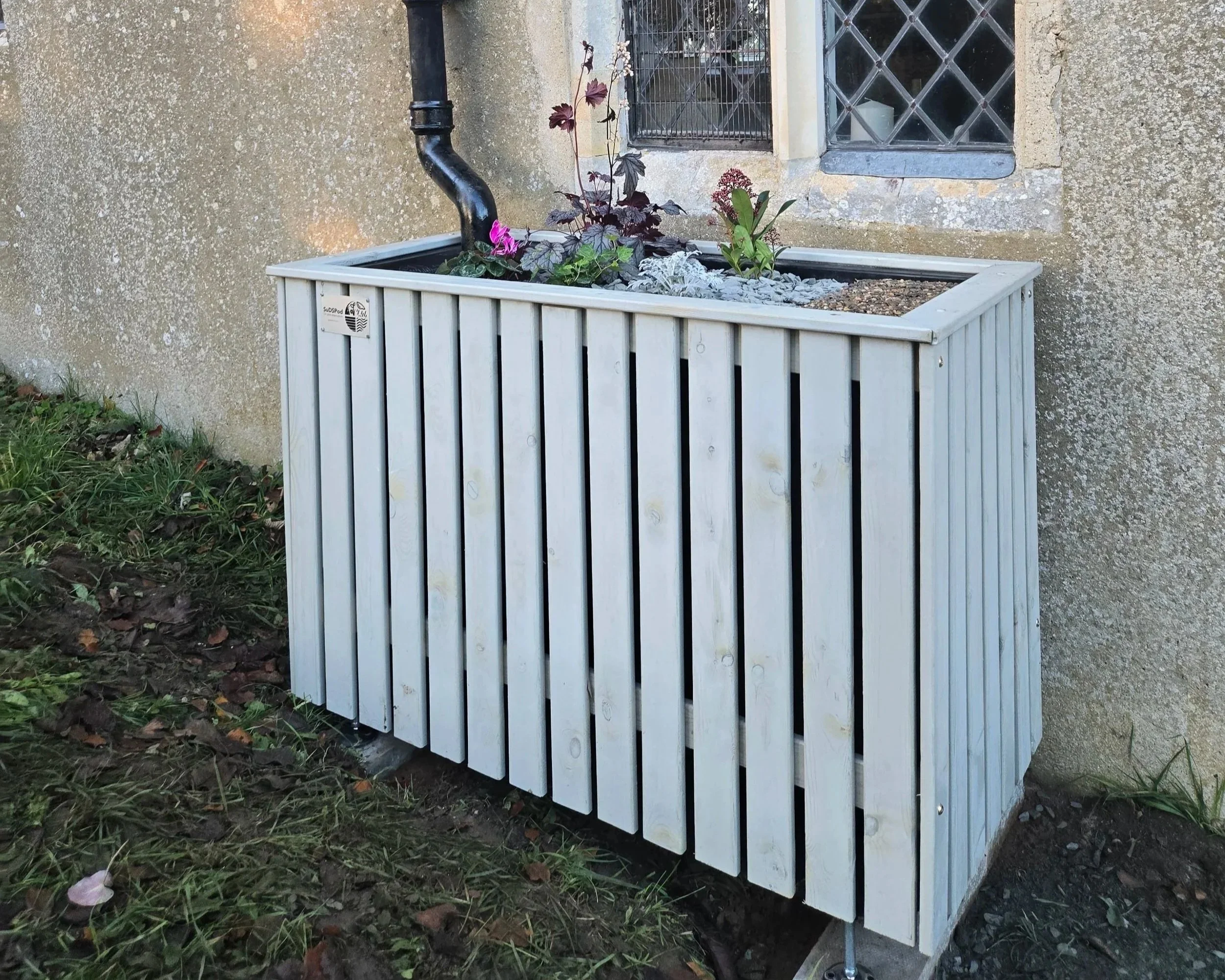
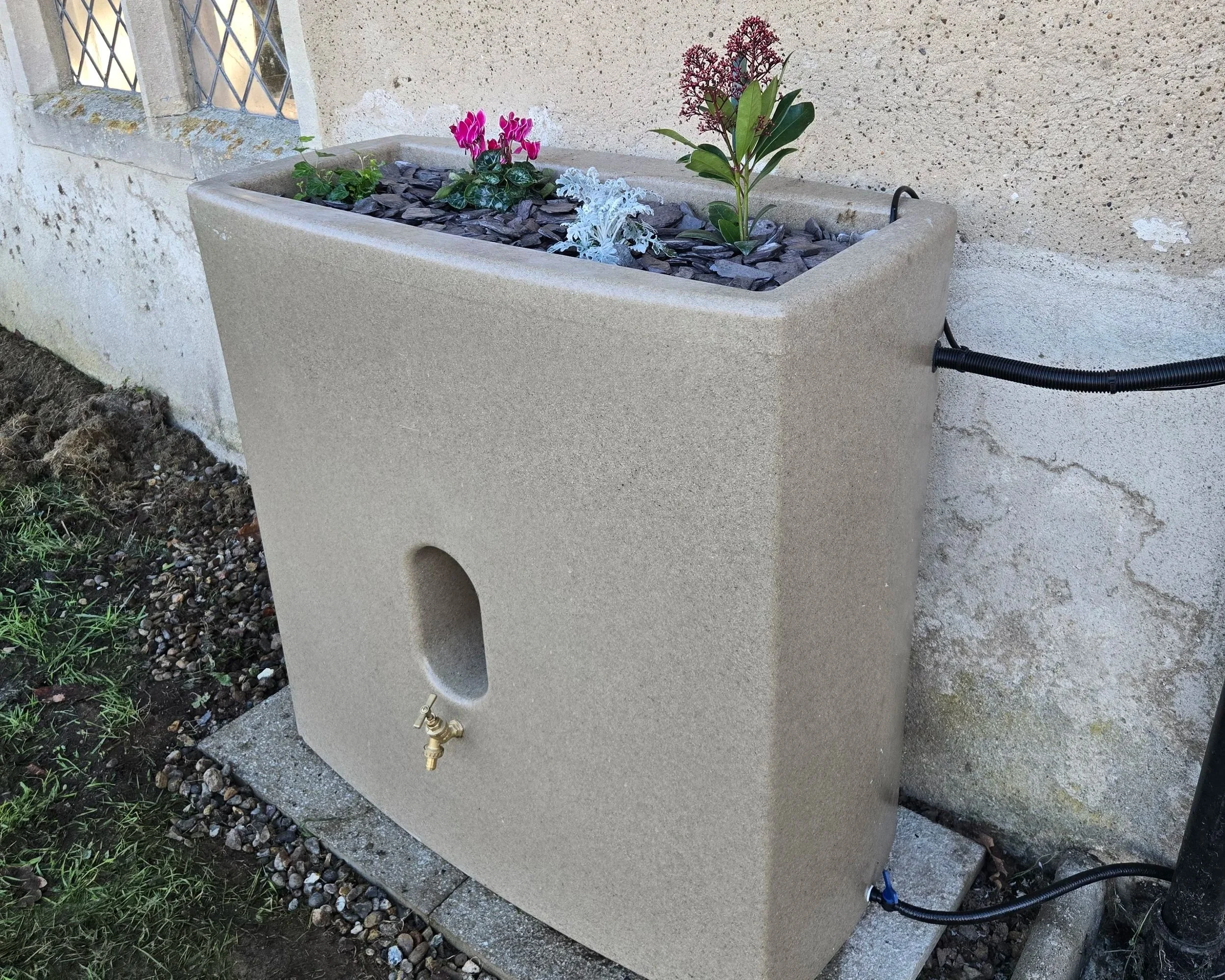
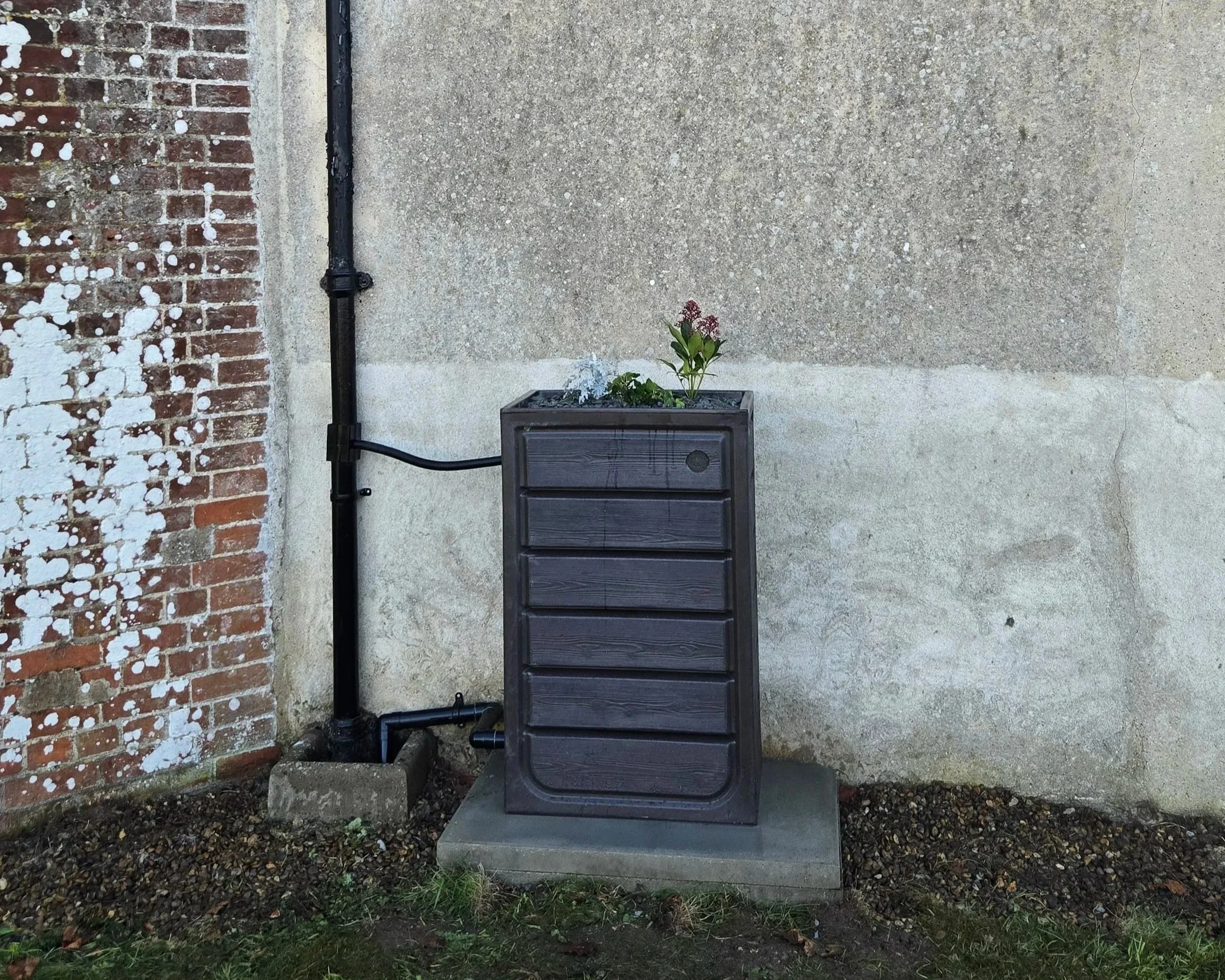
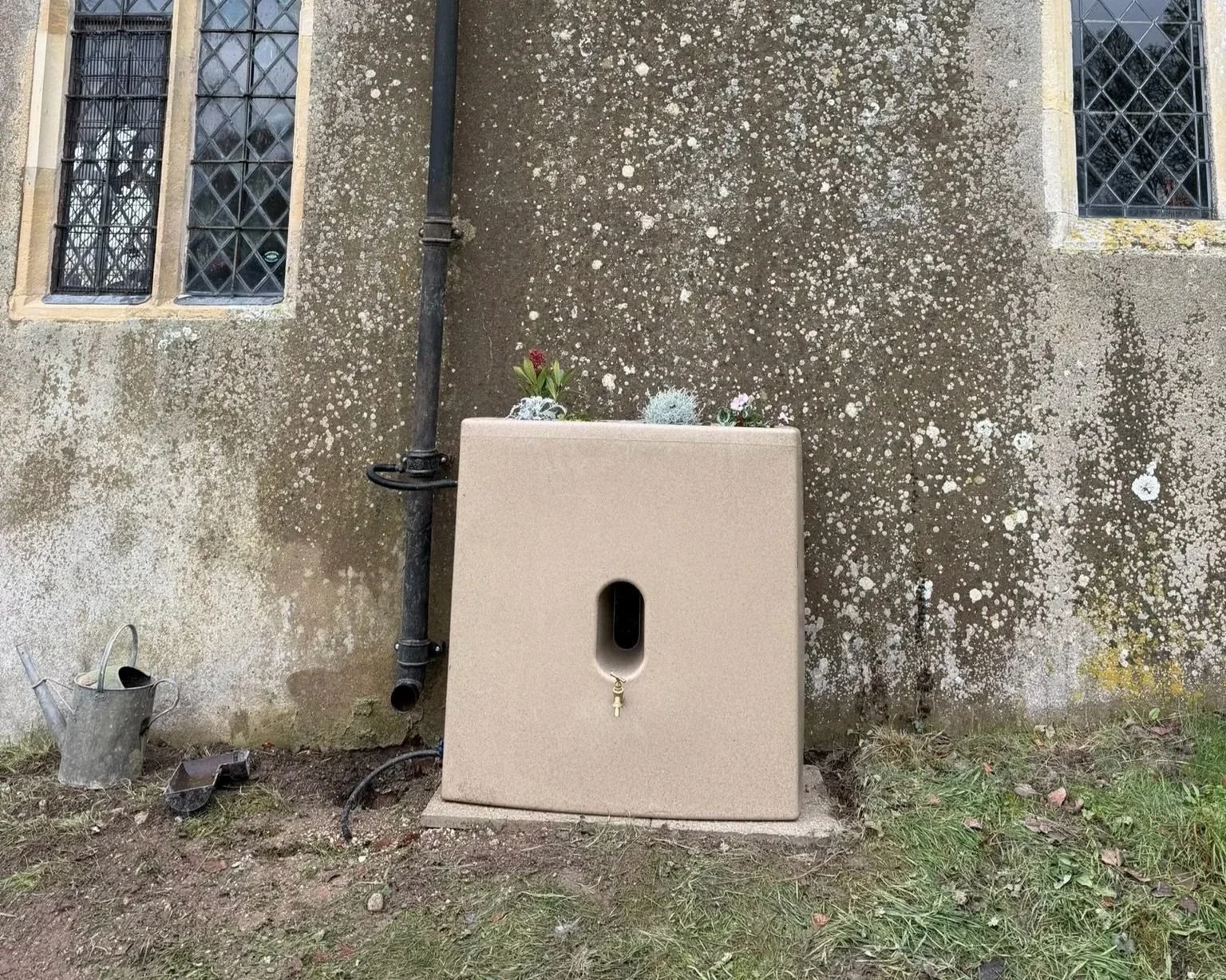
The modelling
We comissioned OurRainwater to evaluate the value potential of downpipe disconnection and roof-runoff capture as a rainwater management intervention for churches in our Suffolk Reclaim the Rain communities.
A digital geospatial analysis of the three sites was undertaken to determine the number and geometry of disconnectable roof areas, whilst a ground-level survey was used to ascertain appropriate bounds for the dimensions of possible rainwater capture products. Three suitable products were selected, and a physics-based hydraulic model is used to simulate the impact of these products on the total cumulative runoff rates from the church roofs. This is undertaken both using standardised design storms, and a year-long historic localised rainfall time-series.
The results of this work are used to propose three suitable rainwater capture products for the church sites, in order to reduce the surface water runoff from the roofs, and provide aesthetic, biodiversity, educational, and water reuse benefits.